The Relevance of Court Reporting in Ensuring Accurate Legal Process
Court reporting is an important component of the lawful system. It gives a specific and impartial record of courtroom activities. This paperwork is necessary for allures and legal research study, making sure that every talked word is recorded properly. The honesty of lawful procedures depends heavily on these transcripts. The function of innovation and developing practices elevates concerns about the future of court reporting and its influence on justice. What modifications exist in advance?
The Function of Court Reporters in the Legal System
Court press reporters play a necessary role in the lawful system by providing precise and unbiased records of proceedings. Their job guarantees that court room dialogues, witness statements, and legal debates are consistently documented, serving as an official record for future recommendation. This documentation is critical for charms, legal study, and preserving the stability of judicial processes. Court press reporters are educated professionals experienced in stenography and numerous taping technologies, allowing them to catch talked words with precision. They need to possess a comprehensive understanding of lawful terminology and court procedures, assuring that their records satisfy the criteria needed by the judicial system. Furthermore, they may give real-time transcription solutions, allowing lawyers and courts to access details immediately throughout proceedings. By fulfilling these obligations, court reporters help with openness, responsibility, and the reasonable administration of justice, therefore strengthening the foundational principles of the legal system.
Ensuring Accuracy in Transcription
Accuracy in transcription is critical for keeping the honesty of lawful procedures. Court press reporters diligently catch every word spoken during depositions, hearings, and trials, ensuring that the official record shows real discussion and exchanges that occur. This accuracy is critical, as also small mistakes can lead to significant misunderstandings or false impressions of the legislation.
To accomplish this level of precision, court reporters use different methods, including active listening and using specialized shorthand approaches. Continuous training and familiarity with legal terminology also improve their capacity to create trusted transcripts.
The verification process is important; reporters often assess their records for prospective discrepancies prior to final submission. This diligence not just maintains the high quality of legal documents however also supports the judicial procedure, enabling lawyers and judges to reference exact records when making choices. Inevitably, precise transcription fosters count on the legal system and guarantees that justice is offered.
The Impact of Modern Technology on Court Reporting
As innovation remains to advance, its influence on court reporting has actually ended up being increasingly substantial. Digital videotaping systems and speech recognition software have actually transformed typical methods, supplying new devices for recording spoken discussion. These improvements enhance effectiveness and accessibility, allowing much faster transcription and real-time reporting. Additionally, cloud-based platforms assist in smooth sharing of transcripts, boosting collaboration among lawyers.
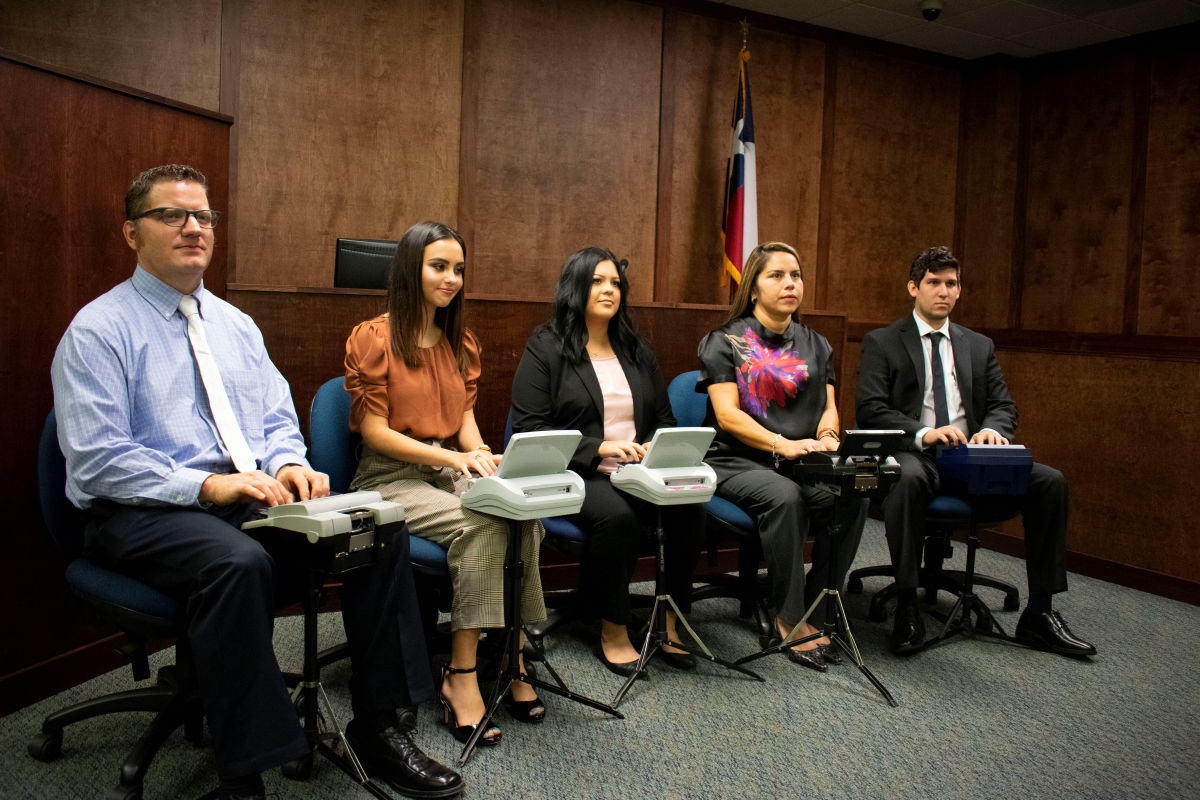
Inevitably, while innovation improves the speed and availability of court reporting, it highlights the need for human oversight to preserve the quality and precision crucial for lawful procedures. As the field proceeds to adjust, the integration of innovation will play an essential duty in shaping the future of court reporting.

The Importance of Discretion and Stability
Privacy and integrity are basic concepts that underpin the technique of court reporting in lawful process (durham court reporting). Court press reporters are delegated with sensitive information, requiring them to maintain discernment and shield the personal privacy of all events involved. This confidentiality promotes a relying on atmosphere where witnesses and litigants can talk openly, making certain that the lawful process is fair and just
Stability is equally important; court reporters must give precise and impartial transcripts, functioning as the authorities record of the proceedings. Any kind of gap in stability can lead to misinterpretations, potentially impacting situation outcomes and threatening the judicial system.
Future Patterns in Court Reporting
The landscape of court reporting is evolving in feedback to technological developments and the altering demands of the legal profession. Arising trends consist of the integration of artificial knowledge and real-time transcription services, which boost efficiency and precision. Court press reporters check that are increasingly utilizing electronic devices, such as cloud-based systems, allowing for smooth collaboration amongst lawful groups and less complicated accessibility to transcripts.
Furthermore, the increase of remote court proceedings has motivated the development of specialized training for press reporters in virtual settings. This change not only adapts to the demands of a globalized lawful landscape but additionally addresses challenges presented by geographical barriers.
In addition, the emphasis on access is driving developments in transcription layouts, ensuring that legal documents satisfy varied audiences. On the whole, the future of court reporting is identified by a blend of conventional abilities and modern-day technology, placing press reporters as vital players in the legal process.
Frequently Asked Questions
What Certifications Are Called For to Become a Court Reporter?
To become a court reporter, individuals generally require a high college diploma, specialized training in court reporting, proficiency in shorthand or voice writing, and accreditation or licensing, depending upon the jurisdiction and particular task demands. - durham court read this post here reporting
Exactly How Do Court Reporters Maintain Their Skills In Time?
Stenotype reporter keep their abilities gradually with constant education, method, and engagement with professional organizations. They frequently learn the facts here now go to workshops, utilize advanced technology, and join qualification programs to boost their effectiveness and adapt to advancing requirements.
What Obstacles Do Court Reporters Face in Their Occupation?
Stenotype reporter encounter countless difficulties, including taking care of high-pressure environments, adjusting to diverse accents and languages, preserving technological efficiency, making sure accuracy under limited deadlines, and handling emotionally billed statements that might impact focus and efficiency.
Are Court Reporters Involved in Various Other Legal Setups Besides Court Rooms?
Court press reporters are certainly associated with different lawful settings past courtrooms, consisting of depositions, mediation hearings, and administrative proceedings. Their knowledge guarantees exact transcripts in these settings, adding to the clearness and reliability of legal documentation.
How Do Court Press Reporters Manage Stressful Situations Throughout Proceedings?

Stenotype reporter handle difficult scenarios by maintaining focus, using reliable time management abilities, and utilizing their training to continue to be calm. They often practice deep breathing and use strategies to lessen diversions, guaranteeing exact documentation under pressure.
Court reporting is an important element of the legal system. Court reporters play a necessary role in the legal system by supplying exact and objective records of proceedings. Ultimately, while technology improves the speed and accessibility of court reporting, it emphasizes the need for human oversight to maintain the quality and accuracy vital for legal procedures. Confidentiality and integrity are fundamental concepts that underpin the method of court reporting in legal proceedings. Court press reporters are indeed entailed in numerous lawful settings past court rooms, including depositions, settlement hearings, and administrative process.